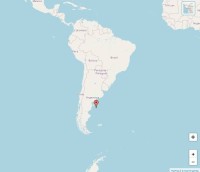
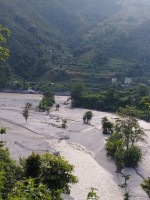
Tanahun-Chitwan Corridor, Nepal
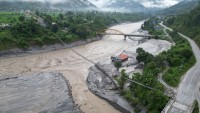
Flowing calmly between the mid-hills of Tanahun and the plains of Chitwan, the Seti River is more than a natural boundary. It is a living corridor that connects landscapes, livelihoods, and communities. Along its banks, the Buddhasingh Road and a modest suspension bridge stand as quiet but powerful symbols of how infrastructure and nature can coexist to shape everyday life in rural Nepal.
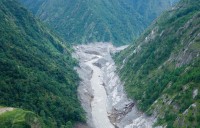
The Seti’s distinct turquoise flow, captured between forested hills and cultivated fields, reflects the river’s role as both a life-supporting ecosystem and a geographical link between two diverse regions. On one side lie terraced farmlands and scattered settlements of Tanahun; on the other, the expanding rural networks of Chitwan. For residents, the river is not an obstacle-it is a shared resource and a familiar companion.
The suspension bridge spanning the Seti has become an essential passage for locals. Farmers use it to transport agricultural produce, students cross it daily to reach schools, and families rely on it for access to markets, health services, and social connections. Before such crossings and road links existed, travel between these areas was time-consuming and often risky, especially during the monsoon season.
Buddhasingh Road, running alongside the river, has further strengthened this connectivity. While modest in scale, the road has played a crucial role in improving mobility, supporting small-scale trade, and reducing isolation for river-adjacent communities. Its presence demonstrates how localized infrastructure can bring tangible development benefits without large-scale environmental disruption.
At the same time, the Seti River remains ecologically significant. Its riverbanks support vegetation, wildlife habitats, and fertile soil for farming. Environmental observers note that maintaining this balance-between development needs and river conservation-is critical. Unplanned construction, excessive extraction of river materials, or pollution could threaten both the ecosystem and the livelihoods that depend on it.
Local communities increasingly recognize this interdependence. There is growing awareness that protecting the Seti’s natural flow and surroundings is directly linked to long-term economic and social well-being. The river, the bridge, and Buddhasingh Road together tell a broader story of Nepal’s rural transformation-where progress is measured not by massive infrastructure alone, but by meaningful, people-centered connectivity.
As Nepal continues to invest in development across diverse terrains, the Seti River corridor offers an important lesson: when nature and infrastructure are respected together, they can quietly but powerfully stitch regions, lives, and futures into one shared journey.