Teknaf, Bangladesh - In a region long affected by human-elephant conflict and fragile ecosystems, a nature-based initiative is demonstrating how environmental conservation and livelihoods can advance together. Under the “Busy Like Bees” initiative, the Center for Natural Resource Studies (CNRS), with support from UNHCR, has successfully implemented a two-day Sustainable Beekeeping and Hive Management Training in Horikhola, Teknaf, on 8-9 November 2025.
The training was conducted as part of the Environment Component of the Community Empowerment Promoted through Skills Development Initiatives Project, aiming to strengthen community resilience while addressing escalating conflicts between humans and wildlife in the Cox’s Bazar-Teknaf Peninsula.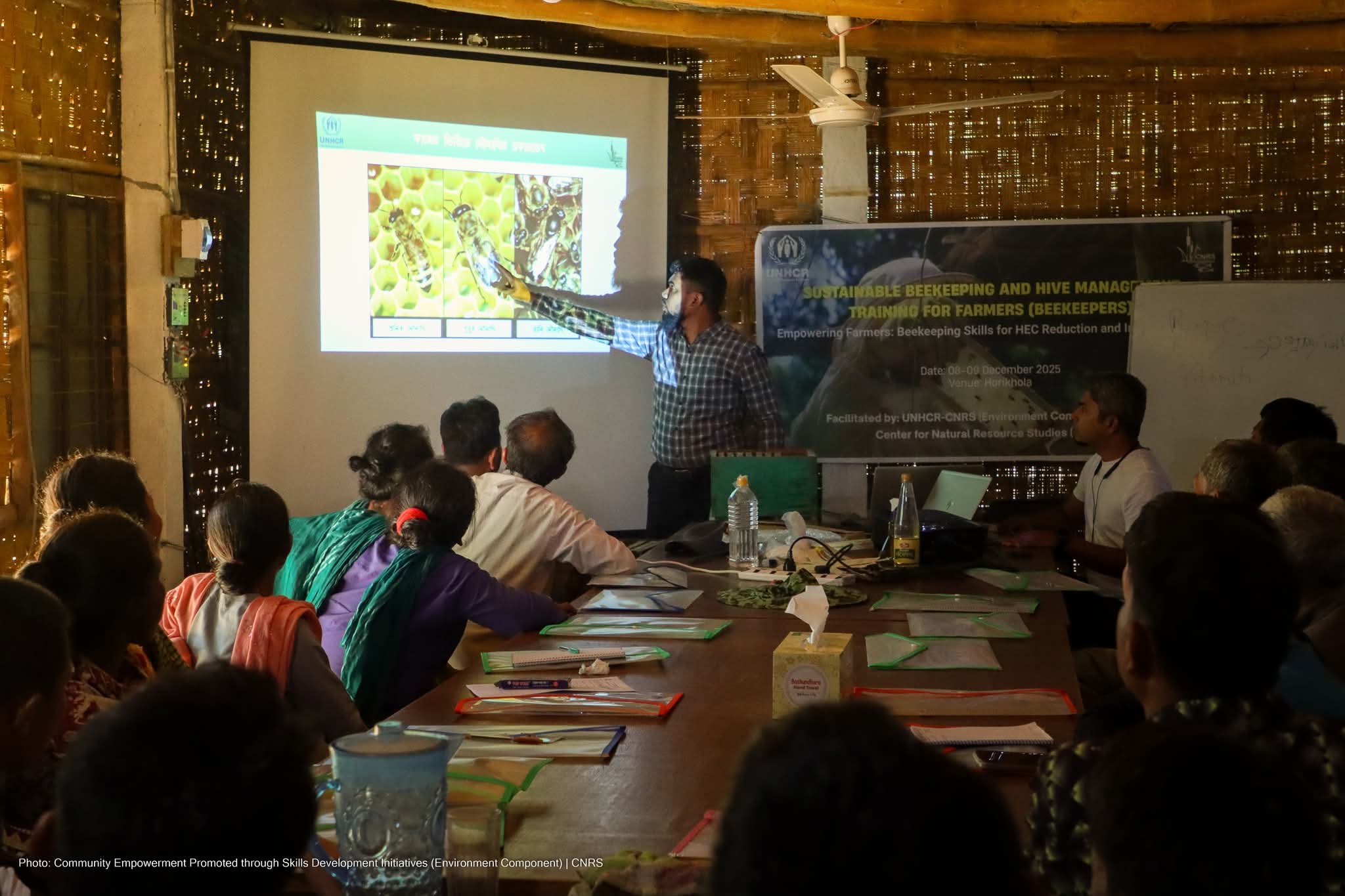
At the heart of the initiative is beehive fencing, a proven, non-violent Nature-based Solution (NbS) that helps deter elephants from entering human settlements and agricultural lands. Elephants naturally avoid bees, making beehive barriers an effective and peaceful method to protect crops, homes, and lives without harming wildlife.
Strengthening Livelihoods Through Ecology
As part of the project’s impact, 72 active beehive colonies-including 60 newly established hives and 12 existing functional hives-have been set up for 20 beneficiaries from the Chakma indigenous community. These hives are already contributing to crop protection while opening new income opportunities through honey production and hive replication.
Beyond conflict mitigation, the initiative underscores the ecological importance of bees. Pollinators play a critical role in maintaining biodiversity, supporting food systems, and enhancing climate resilience-particularly in ecologically sensitive landscapes such as Teknaf.
Hands-on Training and Local Expertise
The training was led by experienced practitioners Mr. Mohammad Munayam Oyas, Master Trainer at BSCIC, and Mr. Md. Anisur Rahman, a commercial beekeeper affiliated with the Bangladesh Beekeepers Association. Participants received practical, hands-on instruction in modern and sustainable beekeeping techniques, including queen grafting, colony segregation, pest management, and the safe use of tools such as the oxalic acid vaporizer.
The approach emphasized empowering local expertise rather than dependency, ensuring that beneficiaries can independently manage and expand their hives in the future.
From Conflict to Coexistence
Project implementers expressed confidence that the trained beneficiaries will replicate beehives, reinforce the beehive fencing system, and gradually scale up income generation. By turning a long-standing conflict into an opportunity for sustainable growth, the initiative illustrates how conservation-led development can foster peaceful coexistence between people and wildlife.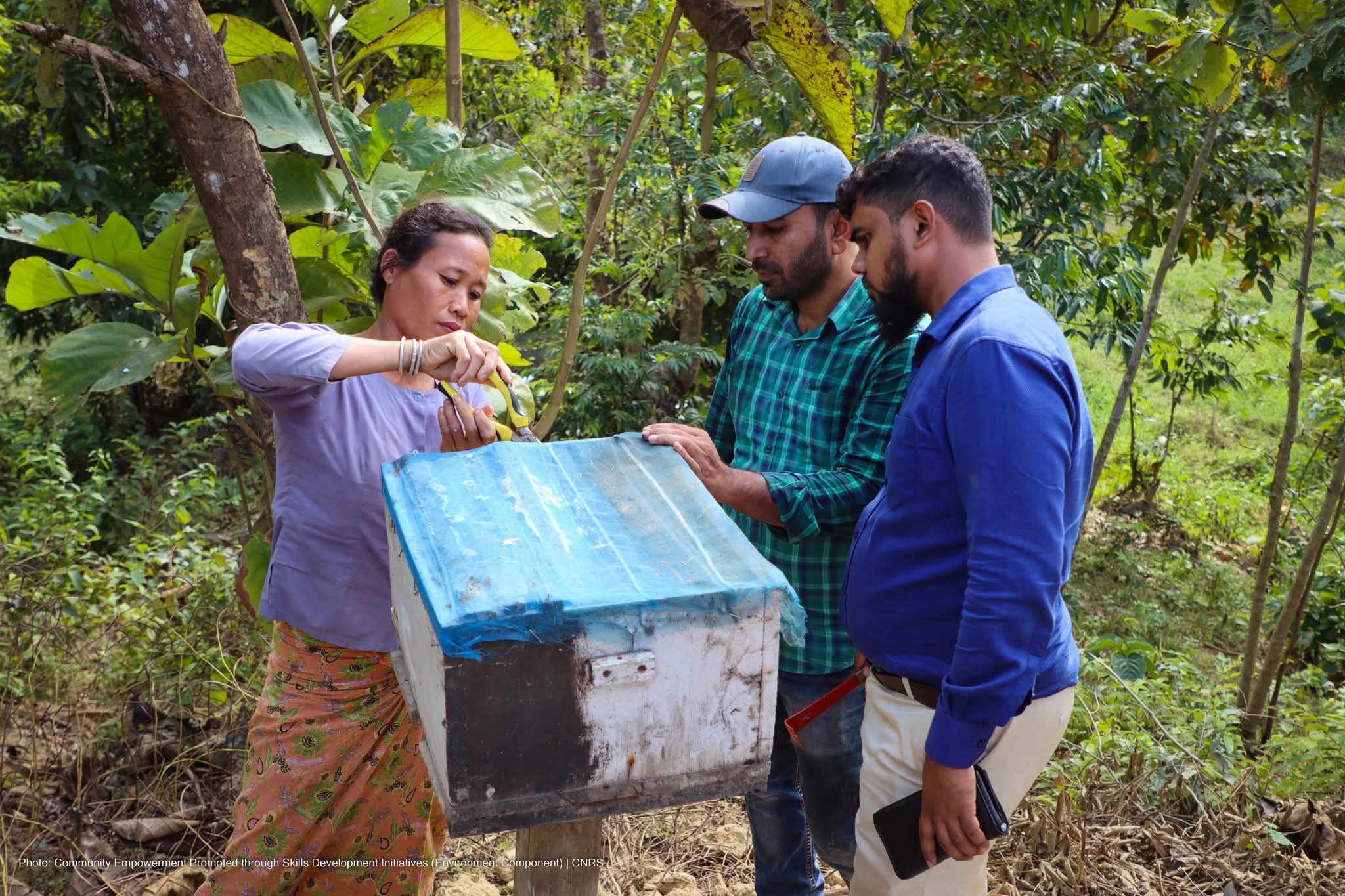
As human-elephant conflict continues to threaten lives and livelihoods across South Asia, the “Busy Like Bees” initiative offers a replicable model-where ecosystem restoration, indigenous knowledge, and economic empowerment converge to deliver lasting solutions.