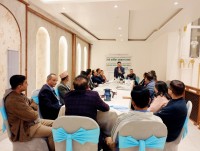
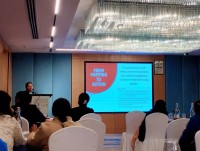
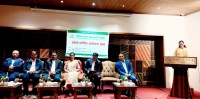
Lalitpur, November 13, 2026 - The Yakthung Samjik Mundhum Dictionary, an important academic publication documenting the indigenous language, knowledge traditions, cultural heritage, and civilisation of the Yakthung (Limbu) people, was successfully launched today at Sayal Batika, Tikhedewal, Lalitpur.
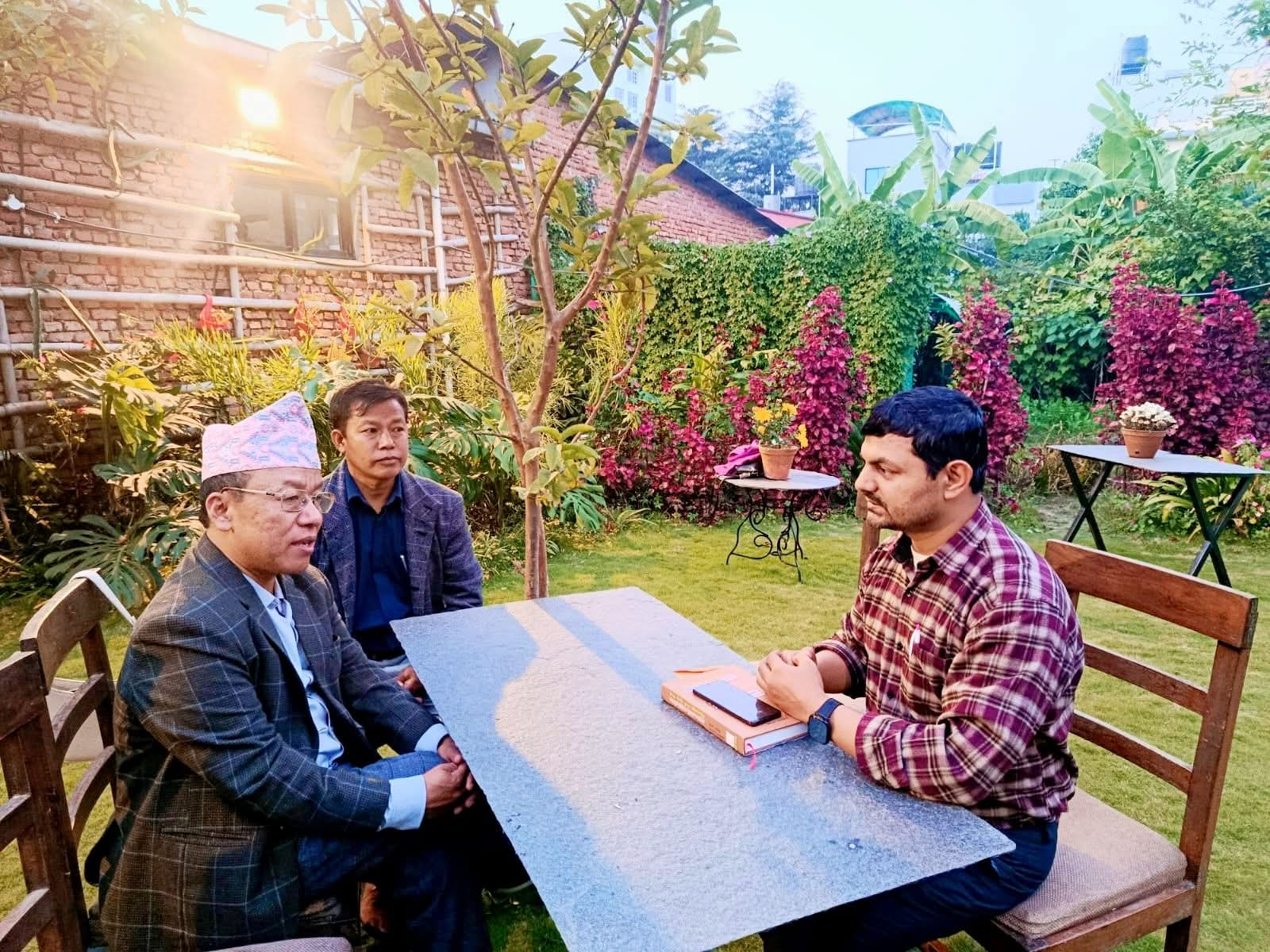
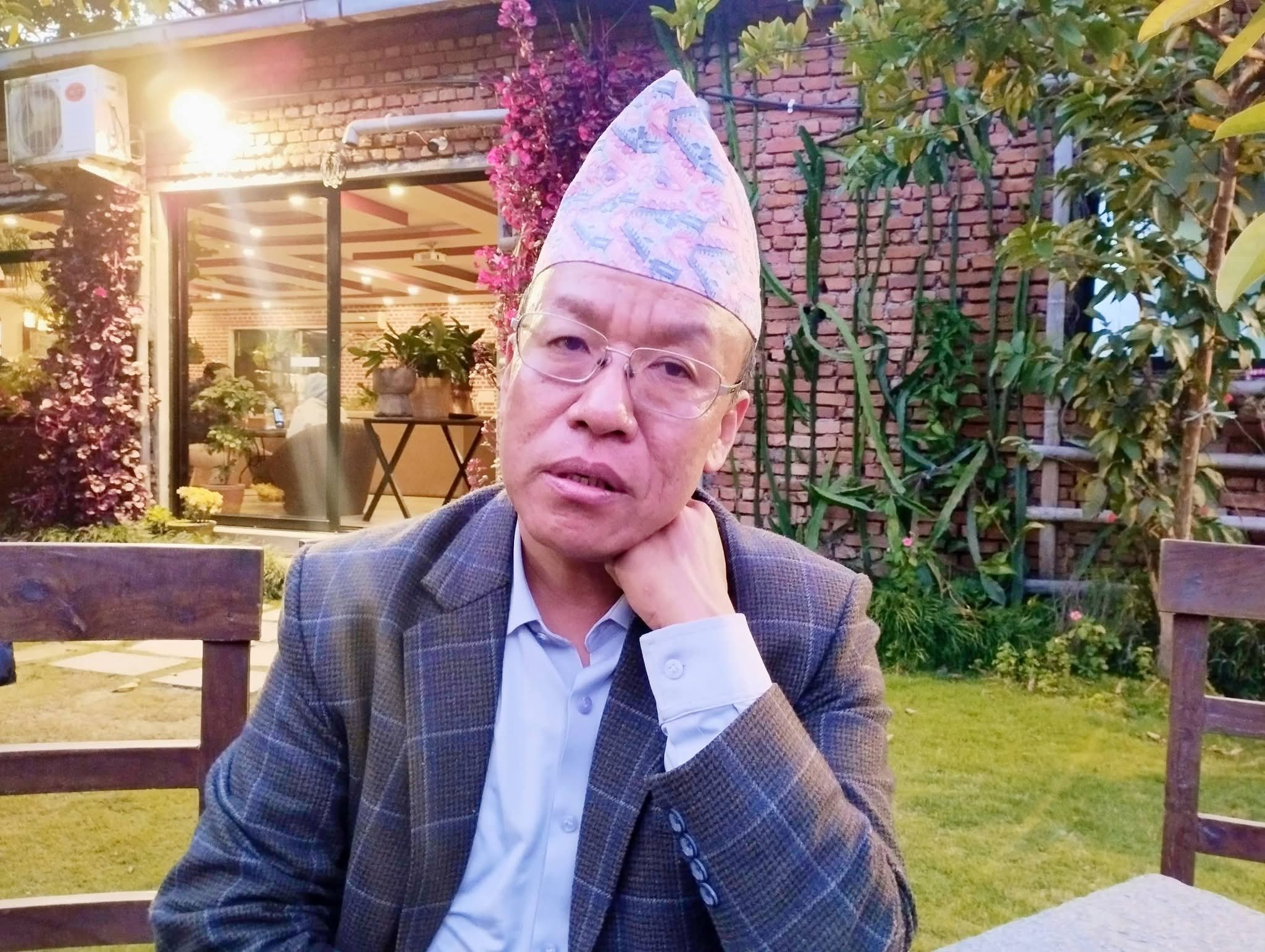
Compiled and edited by D.B. Angbung and Bishnudatta Angbuhang, the 450-page dictionary has been published by the Mundhum Academy. The launch ceremony was graced by senior Mundhum scholar and former Chancellor of the Nepal Academy, Bairagi Kainla, as the chief guest and official unveiler. The programme was attended by Tuttu Tummyahang, Yakla Suhangmas, scholars, linguists, writers, intellectuals, cultural activists, researchers, and representatives of various organisations.
The publication represents an important academic effort to document and preserve the specialised terminology used in Yakthung Samjik Mundhum, the oral and written knowledge tradition of the Yakthung community. It particularly focuses on binomial (two-part) Mundhum expressions, identifying the meanings of both components and explaining their collective meanings within historical, linguistic, cultural, and philosophical contexts.
Unlike conventional dictionaries that primarily focus on everyday vocabulary, this publication gives special attention to specialised expressions used in Mundhum recitations and traditional rituals. It draws on previously published Mundhum texts, earlier dictionaries, linguistic references, and interdisciplinary research, including historical, anthropological, cultural, and archaeological perspectives.
Mundhum is regarded as one of the principal foundations of the Yakthung people's indigenous knowledge system. Beyond religious ceremonies and ritual practices, it preserves ancestral experiences, historical memories, traditional ecological knowledge, philosophies of life, and cultural values passed down through generations.
The publication therefore goes beyond documenting vocabulary. It provides an important resource for understanding the historical development of the Yakthung language, the community's cultural identity, and its ancestral knowledge systems.
The dictionary presents the collected terminology in three languages: Yakthung Limbu, Nepali, and English. This multilingual approach is expected to support broader academic research, language education, literary development, and the transmission of indigenous knowledge to younger generations.
At a time when indigenous languages and oral traditions are increasingly challenged by globalisation, linguistic dominance, and rapid social transformation, the publication highlights the importance of systematic documentation and intergenerational knowledge transfer. It may also provide a valuable foundation for future digital language resources, linguistic research, and applications involving artificial intelligence (AI).
The publication is the outcome of collective academic and community collaboration. Research and academic contributions came from organisations and individuals, including the Södungge Lepmuhang Phedangma Organisation, Jhapa, and the Himalayan Association for Cultural Studies (HIYACS). Publication support and collaboration were also received from the Limbu Investment Group, Mundhum Study Foundation, Hong Kong; Kiyachu South Korea (Jeollado Branch); and Sekmuri Foundation.
Bairagi Kainla served as the adviser to the dictionary project, while Professor Dr. Marohang Yakthung Limbu and Kamal Maden served as review advisers. Tumyahang Bhagiraj Ingname coordinated the preparation of the dictionary.
The publishers have clarified that the dictionary does not claim to cover all cultural terminology or every aspect of the Mundhum tradition. Instead, it primarily concentrates on binomial Mundhum expressions, acknowledging that certain meanings and etymologies require further research, discussion, and interpretation. Future editions are expected to be refined and expanded through additional research and greater community participation.
The successful launch marks a meaningful contribution to the preservation of Nepal's linguistic and cultural diversity. It also reinforces the importance of recognising indigenous knowledge systems as valuable components of humanity's shared cultural heritage.
The Yakthung Samjik Mundhum Dictionary, priced at NPR 2,000, is more than a linguistic reference book. It is an academic initiative to safeguard the ancestral wisdom, linguistic memory, historical identity, and cultural continuity of the Yakthung people for generations to come.
Ecosphere News recognises such initiatives as important contributions to indigenous knowledge preservation, cultural diversity, and the broader global efforts to protect endangered languages and traditional knowledge systems.
#EcosphereNews #Yakthung #Limbu #Mundhum #IndigenousKnowledge #IndigenousLanguages #CulturalHeritage #LanguagePreservation #CulturalDiversity #NepalCulture #TraditionalKnowledge #IndigenousPeoples #KnowledgePreservation #LinguisticHeritage #Nepal