KHUMBU, NEPAL - A breathtaking photograph of Gokyo Lake in Nepal’s Khumbu region offers more than a glimpse of Himalayan beauty-it is a reminder of the fragile relationship between water, ice, air and life in one of the world’s most climate-sensitive landscapes.
Captured by photographer Gudrun Hubinger, the image shows the serene turquoise waters of Gokyo Lake surrounded by rugged Himalayan terrain, towering snow-covered peaks and clouds drifting across the mountains. The tranquil scene reflects the extraordinary natural beauty of Nepal’s high mountains while also highlighting an ecosystem increasingly exposed to the impacts of a changing climate.
“Often called the Third Pole, the Himalayas are vital to global water systems, and this scene serves as a quiet yet powerful reminder of their beauty and vulnerability amid a changing climate,” Hubinger says.
The Hindu Kush Himalaya is one of the most important sources of freshwater in Asia. Its glaciers, snowfields, rivers and high-altitude lakes support ecosystems and communities far beyond the mountains themselves. But rising temperatures are reshaping this delicate environment.
Across the region, climate change is contributing to changes in glacier mass, snow conditions, mountain slopes and hydrological systems. One of the most serious concerns is the growing risk associated with Glacial Lake Outburst Floods (GLOFs)-sudden releases of water from lakes formed by melting glaciers and retreating ice.
For Nepal, the risk is particularly significant. Communities and infrastructure located downstream of high-altitude valleys can face devastating consequences when large volumes of water, ice, rocks and debris move rapidly through river systems.
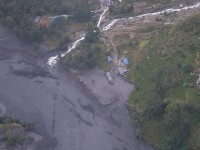
The recent flood tragedy in Nepal has once again underscored how hazards originating in remote mountain environments can cascade downstream, affecting settlements, roads, bridges, hydropower facilities, livelihoods and entire river corridors. Such disasters also demonstrate that mountain hazards do not necessarily stop at national borders, making regional cooperation and cross-border information sharing increasingly important.
The beauty captured at Gokyo therefore carries a deeper message. Protecting the Himalayas requires more than conservation efforts at individual lakes or glaciers. It demands sustained investment in scientific observation, satellite monitoring, hydrometeorological networks, hazard mapping, early-warning systems and the exchange of timely data across borders.
Strengthening these systems can help governments and communities detect emerging hazards earlier, communicate warnings more effectively and reduce loss of life and livelihoods.
The goal of #EarlyWarningsForAll is especially relevant in the Himalayas, where a warning received minutes or hours earlier can make a critical difference for vulnerable communities downstream.
Gokyo Lake remains a symbol of Nepal’s extraordinary natural heritage. But beneath its calm turquoise surface lies a changing mountain environment-one that reminds the world that the Himalayas are not only spectacular landscapes, but also vital and vulnerable components of the global water system.
Photography: Gudrun Hubinger
Location: Gokyo Lake, Khumbu Region, Nepal
#GokyoLake #Gokyo #Khumbu #Nepal #Himalayas #HinduKushHimalaya #ThirdPole #ClimateChange #ClimateCrisis #Glaciers #GlacialLakes #GLOF #GlacialLakeOutburstFlood #MountainEnvironment #WaterSecurity #ClimateResilience #EarlyWarningsForAll #DisasterRiskReduction #HimalayanEcosystem #ClimateAction #NepalHimalayas #EcosphereNews