Kathmandu, September 1, 2026 - Nepal is facing renewed calls for international climate justice following the catastrophic August 26 disaster that devastated communities and critical infrastructure across the Bhote Koshi and Trishuli river systems.
Advocates and disaster experts argue that Nepal should receive direct, non-repayable grants through global climate justice mechanisms, including the Loss and Damage Fund, rather than being forced to rely on commercial loans and debt-driven assistance to recover from a disaster linked to the growing climate risks facing the Himalayas.
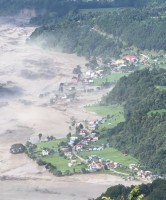
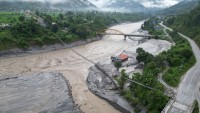
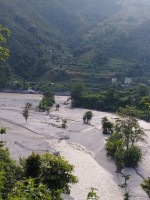
The disaster was triggered by a high-altitude ice-rock avalanche and debris flow that affected the Lhende Khola, Bhote Koshi and Trishuli river systems. Floodwaters reportedly surged dramatically within minutes, reaching heights of up to nine metres in some areas and causing widespread destruction downstream.
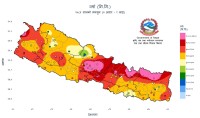
The impacts were felt across several districts, including Rasuwa, Nuwakot, Dhading, Gorkha and Chitwan, where settlements, roads, bridges, hydropower facilities and other critical infrastructure suffered severe damage.
Reconstruction Could Cost Billions
Preliminary estimates suggest that rebuilding damaged roads, bridges, hydropower projects and other essential infrastructure could require between US$4 billion and US$5 billion.
For a developing and mountainous country such as Nepal, financing reconstruction on such a scale presents an enormous economic challenge.
The disaster has also intensified concerns about the growing vulnerability of Himalayan communities to cascading climate-related hazards. Rising temperatures are accelerating changes in glaciers, snowpacks and high-altitude landscapes, increasing the risks of avalanches, glacial lake outburst floods, landslides and sudden debris flows.
Why Climate Loans Are Being Questioned
Nepal contributes only a tiny fraction of global greenhouse gas emissions, yet it is increasingly experiencing some of the most severe consequences of climate change.
Critics argue that requiring climate-vulnerable countries to borrow money to rebuild after climate-related disasters effectively punishes victims twice: first through the destruction caused by a changing climate, and again through the debt accumulated during recovery.
“Recovery financing must not become another pathway into long-term debt,” climate justice advocates have argued, stressing that countries with the greatest historical responsibility for greenhouse gas emissions must play a larger role in financing recovery and reconstruction.
The principle, they say, is not charity.
It is global accountability.
Call for Loss and Damage Support
The Nepali government has sought emergency international financing and support following the disaster, while advocates are urging that global mechanisms established to address climate-related loss and damage be mobilized rapidly.
The Loss and Damage Fund, created to support vulnerable developing countries facing the destructive impacts of climate change, is increasingly being viewed as a critical mechanism for countries such as Nepal.
However, campaigners emphasize that assistance must be delivered as direct grants rather than loans.
They argue that wealthy and highly industrialized nations, whose historical emissions have contributed significantly to global warming, have a responsibility to provide financial support that does not deepen the debt burden of climate-vulnerable countries.
Rebuilding Must Also Mean Building Resilience
Beyond emergency reconstruction, the Trishuli disaster has exposed the urgent need for Nepal to invest in more climate-resilient infrastructure and stronger mountain-risk monitoring systems.
Reconstruction, experts say, should include improved early-warning systems, safer road and bridge designs, climate-resilient hydropower infrastructure, scientific monitoring of glaciers and high-altitude hazards, and stronger preparedness for downstream communities.
For Nepal, the challenge is therefore larger than rebuilding what has been destroyed.
The country must rebuild in a way that reduces future risks.
As communities along the Bhote Koshi and Trishuli river corridors begin the long process of recovery, the disaster is also becoming a powerful test of the world's commitment to climate justice.
For Nepal, the message from advocates is increasingly clear:
Countries that contributed least to the climate crisis should not be forced into deeper debt to survive its consequences. Climate recovery financing must be based on responsibility, justice and direct support-not profit-making debt cycles.
#Nepal #ClimateJustice #LossAndDamage #TrishuliFlood #BhoteKoshi #HimalayanDisaster #ClimateChange #LossAndDamageFund #ClimateFinance #NepalFloods #Himalayas #GlobalClimateJustice #ClimateResilience #SustainableDevelopment #EcosphereNews