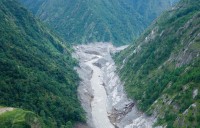
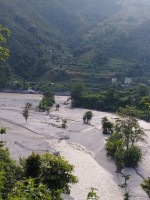
Kathmandu, July 31, 2026 - Urban development experts, government officials, engineers and development partners have called for stronger institutional coordination and the adoption of nature-based solutions to address the worsening problem of urban flooding in the Kathmandu Valley.
The recommendations emerged during the latest session of Urban Dabali, organized by the Centre for Integrated Urban Development (CIUD) and HELVETAS Nepal on 30 July 2026 at Ye De Sanskritik Bhawan, Dharmapath, Kathmandu, in coordination with Kathmandu Metropolitan City (KMC). The session was held under the theme “Urban Floods in Nepal: From Recurring Crisis to Resilient Cities.”
Rivers Cannot Be Forced Beyond Their Natural Course
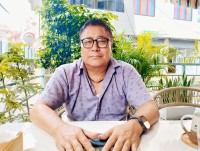
Delivering the keynote presentation, Padma Sunder Joshi, Urban Development Expert, Vice President of Administration and Finance at Madan Bhandari University of Science and Technology, and Chairman of CIUD, warned that Kathmandu Valley is increasingly repeating mistakes seen in other parts of the world where rivers were excessively engineered.
Drawing on the example of the Rhine River, which was straightened over the past two centuries and is now undergoing restoration efforts due to long-term flood impacts on riverside cities, Joshi argued that a river cannot be permanently controlled beyond its natural path.
He noted that traditional Newar settlements had sophisticated drainage systems that worked in harmony with the valley’s hydrology. However, decades of rapid urbanization and encroachment have led to the disappearance of rivers, rivulets and ponds, including Ban Ganga, Til Ganga and Paleswa.
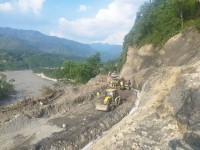
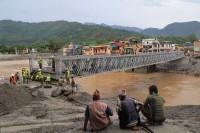
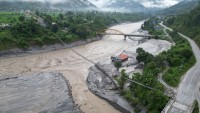
Using satellite imagery of the Nakkhu and Chobhar Galchhi areas from 2003 to the present, Joshi demonstrated how the straightening of waterways and encroachment for roads and housing had contributed to the devastating September 2024 floods. He also cautioned that rising retaining walls combined with the shrinking width of the Bagmati River are increasing flood risks across the valley.
Joshi called for a thorough investigation into how riverbank encroachment had been permitted and urged both corrective and preventive measures at local, provincial and federal levels.
Panel Discussion Highlights
The keynote was followed by a panel discussion featuring:
Ar. Yek Raj Adhikari, Deputy Director General, Department of Urban Development and Building Construction
Dr. Pawan Bhattarai, Coordinator and Assistant Professor, Water Resources Engineering Programme, Institute of Engineering, Pulchowk Campus
Machakaji Maharjan, Project Director, High Powered Committee for Integrated Development of Bagmati Civilization
The discussion was moderated by Rija Joshi, Executive Director of CIUD.
Maharjan stated that his organization is working on both legal and field-level measures to reduce river overflow risks. Proposed interventions include converting UN Park fully into public park use, lowering the height of retaining walls in selected sections, and determining minimum bridge lengths based on hydrological studies.
Dr. Bhattarai emphasized that fluvial flooding (river overflow) and pluvial flooding (intense rainfall runoff) must be addressed together, particularly in the context of climate change. He observed that research produced by the Institute of Engineering often fails to influence policy because of weak coordination with government agencies.
Among his recommendations were:
introducing a dedicated elective course on urban flooding for engineering students,
using software modeling and animation to improve public awareness,
promoting bio-swales, rainwater infiltration systems and underground storage tanks for rainwater reuse.
Ar. Adhikari stressed that urban flood management cannot be handled by a single institution. He called for close coordination among federal, provincial and local governments, technical institutions, development partners and local communities. He also identified the proposed Kathmandu Valley 2040 Vision as an important opportunity to mainstream integrated urban flood management into future urban planning.
Nature-Based Solutions and Groundwater Recharge
During the discussion, Joshi further argued that excessively high retaining structures and the isolation of watersheds are not only worsening urban flooding but are also harming biodiversity across the valley.
He identified groundwater recharge and rainwater harvesting as some of the most effective available solutions, noting that most areas of the Kathmandu Valley are suitable for such measures. However, he cautioned that financial incentives alone have not been sufficient to encourage widespread household adoption.
Instead, he called for sustained and qualitative public awareness campaigns and recommended that the government acquire private land for public use where necessary to protect river corridors, floodplains and natural drainage systems.
Joshi also argued that planning and implementation should not be concentrated within a single organization. He proposed the creation of a robust coordinating body capable of bringing together the valley’s numerous planning and implementing agencies under a common framework.
Broad Participation and Key Conclusions
Approximately 60 participants attended the programme, including representatives from government agencies, municipalities, universities, development partners, professional organizations and community groups.
The event concluded with an interactive discussion that highlighted several priorities for building flood-resilient cities in the Kathmandu Valley:
integrated land-use planning,
protection of river corridors and floodplains,
restoration of natural drainage systems,
promotion of rainwater harvesting and groundwater recharge,
evidence-based decision-making supported by stronger institutional coordination.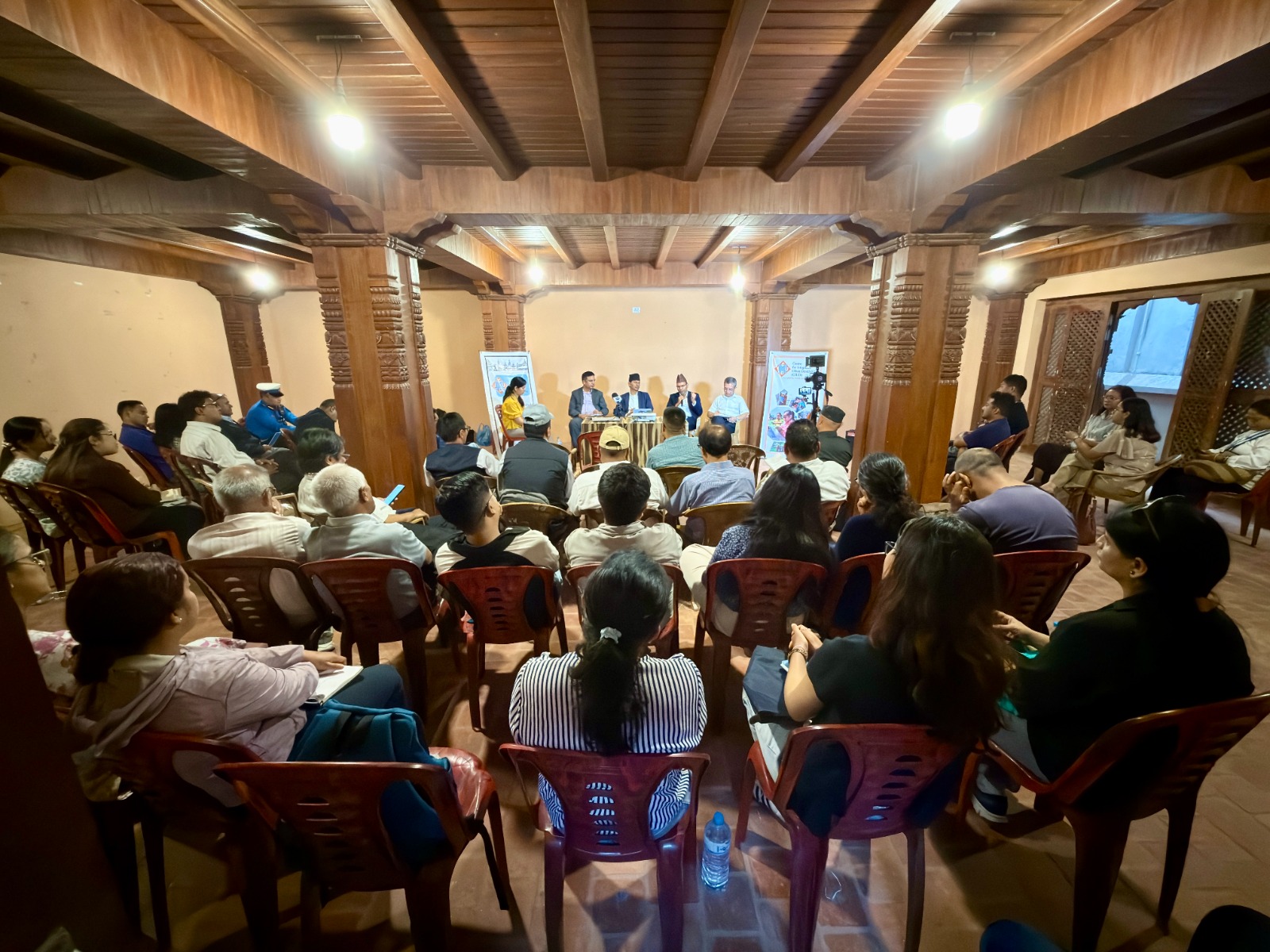 Participants generally agreed that the discussion was timely and highly relevant to the current urban challenges facing Kathmandu Valley, and that it provided valuable insights for strengthening urban governance and long-term flood resilience in Nepal.
#EcosphereNews #UrbanDabali #KathmanduValley #UrbanFlooding #BagmatiRiver #NatureBasedSolutions #ClimateResilience #SustainableCities #RainwaterHarvesting #GroundwaterRecharge #UrbanPlanning #FloodResilientCities #CIUD #HELVETASNepal #KathmanduMetropolitanCity #NepalDevelopment #UrbanGovernance #ClimateChange #Biodiversity #IntegratedWaterManagement #Kathmandu2040 #EnvironmentalSustainability #ResilientNepal #GreenInfrastructure #RiverRestoration #FloodManagement #SustainableUrbanDevelopment #NepalEnvironment #EcosphereWorld #EnvironmentalJournalism