Bhojpur, Nepal – In an effort to enhance forest conservation, protect biodiversity, and maintain ecological balance, the Division Forest Office, Bhojpur has launched the "One Community Forest–One Conservation Pond" initiative. Under the program, conservation ponds have been constructed in four community forests to address increasing water scarcity in forest ecosystems and improve wildlife habitat.
According to Khudrus Miya, Chief of the Division Forest Office, Bhojpur, conservation ponds have been completed in Aahale Community Forest, Dhode Baikhake Community Forest, Bhadrase Chare Bhir Community Forest, and Harkate Aamlala Community Forest. The ponds have been built in geographically dry areas where water sources often disappear during the summer season, providing a reliable water source for wildlife.
"We have implemented the conservation pond construction program in community forests and have successfully completed four ponds so far. We intend to continue expanding similar initiatives in the coming years," Miya said.
Forest officials noted that changing rainfall patterns associated with climate change have intensified water shortages in forest areas, increasing pressure on wildlife and ecosystems. They emphasized that conservation ponds contribute not only to sustaining wildlife but also to preserving vegetation, maintaining soil moisture, and strengthening overall ecosystem resilience. According to the office, effective forest conservation requires protecting water resources and biodiversity alongside trees.
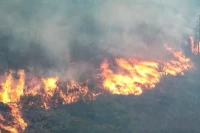
Forest Officer Nar Muhammad Miya highlighted that the ponds also serve as an important resource for forest fire management. During emergencies, the stored water can be used immediately to suppress fires, helping reduce damage to forests while serving as an emergency water reserve.
The Division Forest Office stated that the ponds are expected to support groundwater recharge by storing monsoon rainfall, allowing water to gradually infiltrate the soil and help maintain groundwater levels in surrounding areas. This process is also expected to provide long-term benefits for local agriculture, particularly for farming communities that depend on seasonal water availability.
The project was implemented during the Fiscal Year 2082/83 with a budget of NPR 1 million provided by the Provincial Government, resulting in the construction of four recharge ponds. Officials said the program will be expanded to additional community forests in the future.
The office credited the active participation of Community Forest User Groups for the successful implementation of the project. Local resident Ram Kumar Rai said the initiative has generated positive expectations within the community.
"Previously, the forests became extremely dry during the summer, forcing wildlife to move toward nearby settlements in search of water and increasing human–wildlife conflict. We believe these conservation ponds will help reduce that problem," Rai said.
Stakeholders believe that although conservation ponds are relatively small infrastructure projects, they can generate significant long-term environmental benefits. In Nepal's hilly regions, where water resource management remains a major challenge, such structures are considered an effective climate adaptation measure.
Implemented through collaboration among the Division Forest Office, local governments, and Community Forest User Groups, the initiative is emerging as a promising model for community-based forest conservation in Bhojpur. Officials expect that expanding similar programs will contribute to greener forests, improved biodiversity conservation, sustainable water management, and balanced environmental development.
#EcosphereNews #Bhojpur #CommunityForestry #ForestConservation #Biodiversity #ClimateAction #WaterConservation #ConservationPonds #GroundwaterRecharge #WildlifeProtection #EnvironmentalSustainability #Nepal #NatureBasedSolutions #SustainableDevelopment