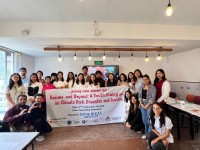
Pokhara, Nepal - A significant step toward climate-resilient development in Nepal has been marked with the successful organised of a provincial-level stakeholder workshop focused on integrated water governance in the Gandaki River Basin. Held in Pokhara on Wednesday, the event brought together policymakers, scientists, and institutional leaders under the Gandaki Basin Climate Resilient Project (GBCRP).
The workshop, titled “Provincial Stakeholder Sharing Workshop on Reconciling the Water Model for the Entire Gandaki River Basin,” served as a platform to present and validate a comprehensive basin-wide water model-an important scientific advancement for Nepal’s water resource management.
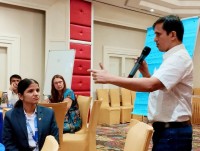
Key provincial figures, including Dr. Krishna Chandra Devkota, Vice Chairperson of the Gandaki Province Policy and Planning Commission, and senior officials from the Ministry of Forest and Environment and the Ministry of Energy, Water Resources and Water Supply, emphasized the need for coordinated, data-driven approaches to address increasing climate variability and water-related risks.
Technical presentations highlighted the development of the reconciled water model using the Soil and Water Assessment Tool (SWAT), enhanced with machine learning techniques. According to hydrological experts, the model integrates findings from multiple previous studies into a unified system capable of assessing water availability, hydrological patterns, sediment transport, and the long-term impacts of climate change across the basin.
Experts noted that the model incorporates both baseline data and future climate scenarios, making it a critical tool for planners and decision-makers. It is also designed to integrate with river basin information systems and support institutional capacity-building for effective application.
Representatives from organizations such as National Trust for Nature Conservation (NTNC) and International Union for Conservation of Nature (IUCN) underscored the importance of aligning scientific innovation with policy frameworks to ensure sustainable outcomes.
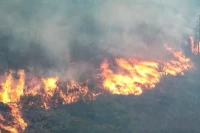
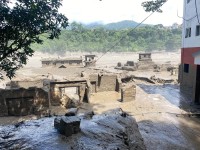
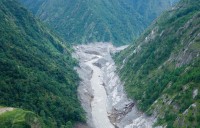
The Gandaki River Basin, one of Nepal’s most vital ecological and economic regions, faces growing challenges from climate change, including erratic rainfall, floods, and sedimentation. Stakeholders at the workshop stressed that such integrated modeling tools are essential to guide evidence-based planning, reduce risks, and enhance resilience for both communities and ecosystems.
The event concluded with a shared commitment to strengthen inter-agency collaboration, promote open data systems, and translate scientific insights into actionable policies at provincial and national levels.
As Nepal continues to confront the realities of climate change, initiatives like GBCRP signal a shift toward more informed, adaptive, and sustainable water governance.
#EcosphereNews #ClimateResilience #WaterGovernance #GandakiRiverBasin #Nepal #SustainableDevelopment #ClimateAction #EnvironmentalPolicy #DataDrivenPlanning #GBCRP #IUCN #NTNC