Lalitpur - The official launch of the Bamboo Structure Design Guideline-2082, approved on 24 November, marks a significant milestone in Nepal’s efforts to promote sustainable, affordable, and disaster-resilient construction using indigenous materials. More than a technical framework, the guideline reflects a growing national commitment to mainstream bamboo as a reliable and climate-resilient building material across public and private construction.
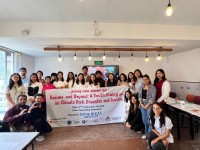
The guideline was formally unveiled at a national event organized by the Department of Urban Development and Building Construction (DUDBC) under the Ministry of Urban Development, bringing together policymakers, technical experts, local government leaders, researchers, and community representatives.
Speaking at the event, Hon. Kulman Ghising, Minister for Urban Development, emphasized the broader economic and developmental significance of the guideline. He stated that the document provides clear direction on how homes can be constructed using locally available resources within the country. According to the minister, increased use of indigenous materials like bamboo can create local employment opportunities, reduce dependency on imported construction materials, and help narrow Nepal’s trade deficit.
However, the minister cautioned that formal approval alone is insufficient. He stressed the need for effective implementation, enforcement, and normalization of the guideline so that bamboo structures become an accepted part of everyday construction-from housing projects to public infrastructure.
Beyond policy discussions, the event highlighted lived experiences from communities already benefiting from bamboo-based housing solutions. Laxmi, a resident of Kanepokhari-3, Morang, shared her experience of living in a cement-bamboo frame technology (CBFT) house for the past two years. She explained that earlier, strong winds and heavy rainfall caused constant fear, but her current home is safe, leak-free, and provides a sense of security and peace of mind. Her testimony underscored that safe housing is not merely a technical issue, but a matter of dignity, confidence, and well-being.
Rabindra Bohara, Director General of DUDBC, highlighted the intent behind developing the guideline, stating that it aims to promote environmentally friendly, cost-effective, and disaster-resilient construction practices. He noted that ensuring safe housing and supporting sustainable development remain central to the government’s urban development agenda. Bohara also emphasized the importance of inclusive consultations, technical rigor, and coordinated action among stakeholders to translate the guideline into tangible results on the ground.
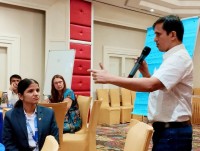
A panel discussion during the event brought together diverse perspectives, including Ekraj Adhikari, Deputy Director General of DUDBC; Tirtharaj Bhattarai, Mayor of Diktel Rupakot Majhuwagadhi Municipality, Khotang; Rajmati Ignam, Chairperson of Kanepokhari Rural Municipality, Morang; and Dr. Prof. Jiv Raj Pokharel, former Vice Chancellor of the Nepal Academy of Science and Technology (NAST). Panelists emphasized that local governments must take the lead in implementation, while research, standards, and technical practices must continue to evolve. Building community trust through demonstrated safety, durability, and cultural relevance of bamboo structures was identified as a key priority.
Participants agreed that the Bamboo Structure Design Guideline-2082 should be seen as a starting point rather than a final outcome. Its success, they noted, will depend on sustained capacity building, institutional coordination, and public acceptance.
The milestone reflects strong collaboration among government agencies, development partners, and technical institutions. Organizers acknowledged DUDBC for leading the national initiative and The Hilti Foundation for its continued support in advancing safe, affordable, and climate-resilient housing solutions in Nepal.
As Nepal faces growing challenges from climate change, urbanization, and housing shortages, the new bamboo guideline offers a pathway to align traditional knowledge with modern engineering. Stakeholders emphasized that when policy connects with people’s needs, and innovation builds on local traditions, the impact can be both lasting and transformative.