Kathmandu - Emphasising the importance of collective leadership and community ownership, a National Joint Learning and Knowledge Sharing Workshop was successfully held today to advance sustainable Water, Sanitation and Hygiene (WASH) systems in Nepal.
The workshop brought together local leaders, community representatives, development practitioners, and partner organisations, creating a platform for open dialogue, shared experiences, and practical learning. Participants reflected on ongoing WASH initiatives, discussed challenges faced at the local level, and explored pathways to strengthen systems that ensure safe water, sanitation, and hygiene for all.
A key focus of the workshop was the role of local governance and community participation in sustaining WASH services. Speakers and participants highlighted that long-term impact is only possible when communities are actively involved in planning, implementation, and monitoring, supported by strong institutional coordination.
The event also underscored the value of partnership-driven development. Organisations including Mahuli Community Development Center (MCDC), Rural Reconstruction Nepal (RRN), and Sabal Nepal were acknowledged for their contributions in implementing WASH projects at the community level. Their work has helped translate policy commitments into tangible improvements in people’s daily lives.
The WASH initiatives are supported by international partners Welthungerhilfe and Germany’s Federal Ministry for Economic Cooperation and Development (BMZ), reflecting continued global cooperation to address Nepal’s water and sanitation challenges.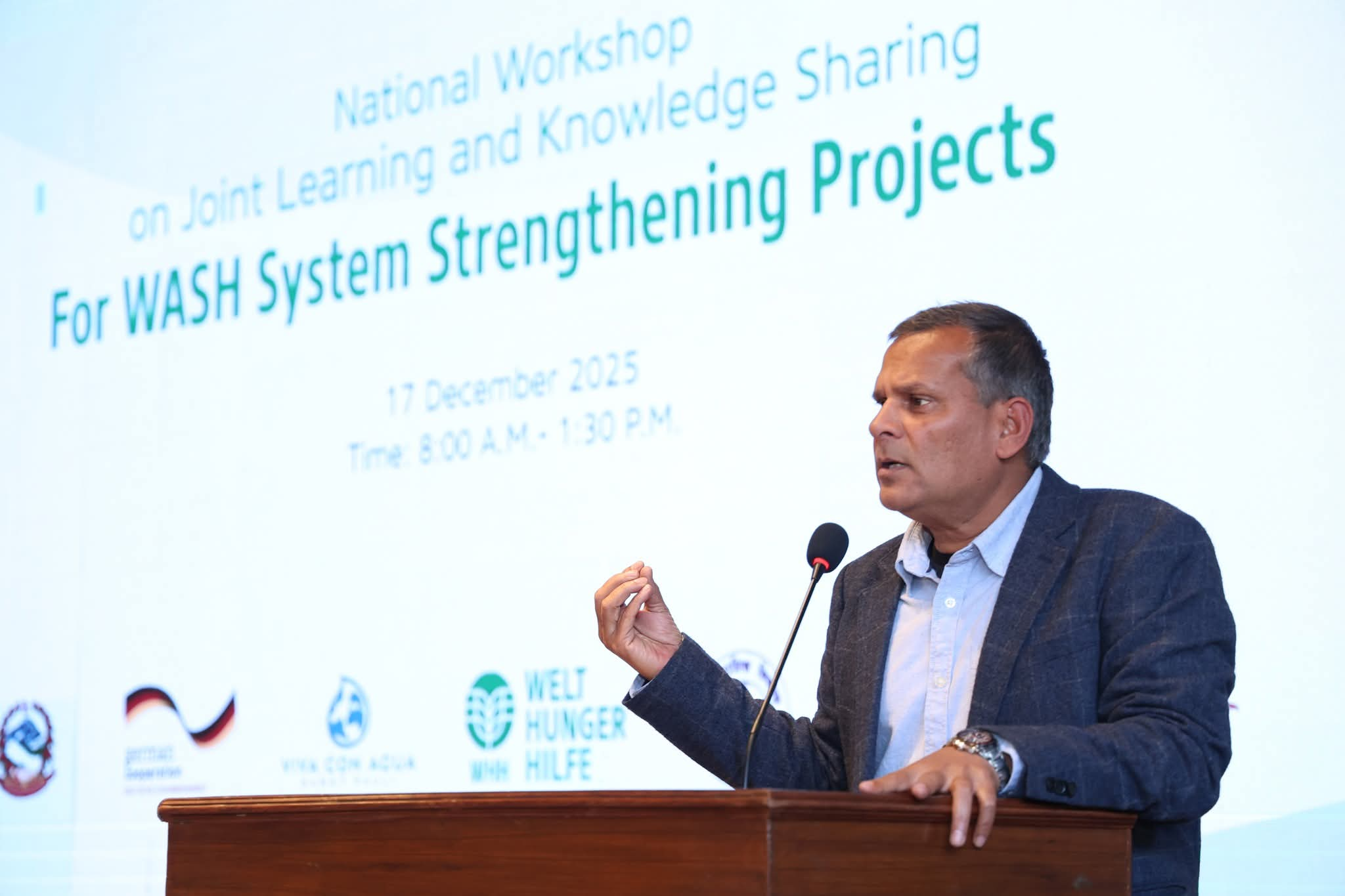
Participants concluded the workshop with a shared commitment to strengthen coordination, apply lessons learned, and scale up successful practices. The outcomes of the learning exchange are expected to inform future programming and policy dialogue, reinforcing Nepal’s progress toward inclusive and sustainable WASH services.