Paro, Bhutan - As countries across the Hindu Kush-Himalaya (HKH) grapple with growing water insecurity, climate risks, and mounting land-use pressures, Nature-based Solutions (NbS) are increasingly being recognized as a practical pathway toward resilience. However, experts warn that scaling up NbS without strong scientific evidence and coordinated regional action could limit their long-term impact.
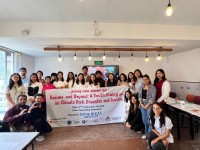
These concerns were central to discussions at the Third Hindu Kush-Himalaya Science-Policy-Finance Dialogue, organized by the International Centre for Integrated Mountain Development (ICIMOD) in Paro, Bhutan. The dialogue brought together policymakers, scientists, development practitioners, and financiers to bridge gaps between science, policy, and investment related to NbS in the region.
Speaking at the dialogue, IWMI researcher Santosh Nepal underscored the urgent need to strengthen the evidence base for springshed conservation, a critical NbS approach in mountain and hill regions where springs serve as primary water sources for millions of people.
“There is a need to generate robust evidence and assess the full range of impacts achieved through springshed conservation, both to prepare an investment-ready springshed portfolio and to establish scientific metrics that investors can trust,” Nepal said during the panel discussion.
His remarks reflected a broader challenge facing NbS initiatives in the HKH: while community-based efforts are widespread, many lack systematic monitoring, standardized indicators, and financial frameworks that can attract sustained public and private investment.
The message closely aligns with ongoing work in western Nepal under the Local Adaptation to Climate Change (LACC) project, where the International Water Management Institute (IWMI), in collaboration with local partners, is supporting a locally led and evidence-based framework for springshed revival. The initiative integrates hydrogeological assessments, catchment-level ecosystem restoration, community-based monitoring, and capacity building of local governments.
Through this approach, municipalities are better equipped to plan and manage water resources sustainably, while generating data that can inform policy decisions and long-term adaptation strategies. The project also demonstrates how local knowledge, when combined with scientific methods, can enhance climate resilience and water security.
Experts at the ICIMOD dialogue emphasized that such integrated models are essential for the wider HKH region, where climate change is accelerating glacier loss, altering rainfall patterns, and increasing pressure on fragile mountain ecosystems.
As discussions concluded, participants agreed that Nature-based Solutions - particularly springshed management - hold significant promise, but must be supported by credible science, cross-border knowledge sharing, and innovative financing mechanisms. Without these foundations, scaling up NbS risks remaining fragmented and underfunded.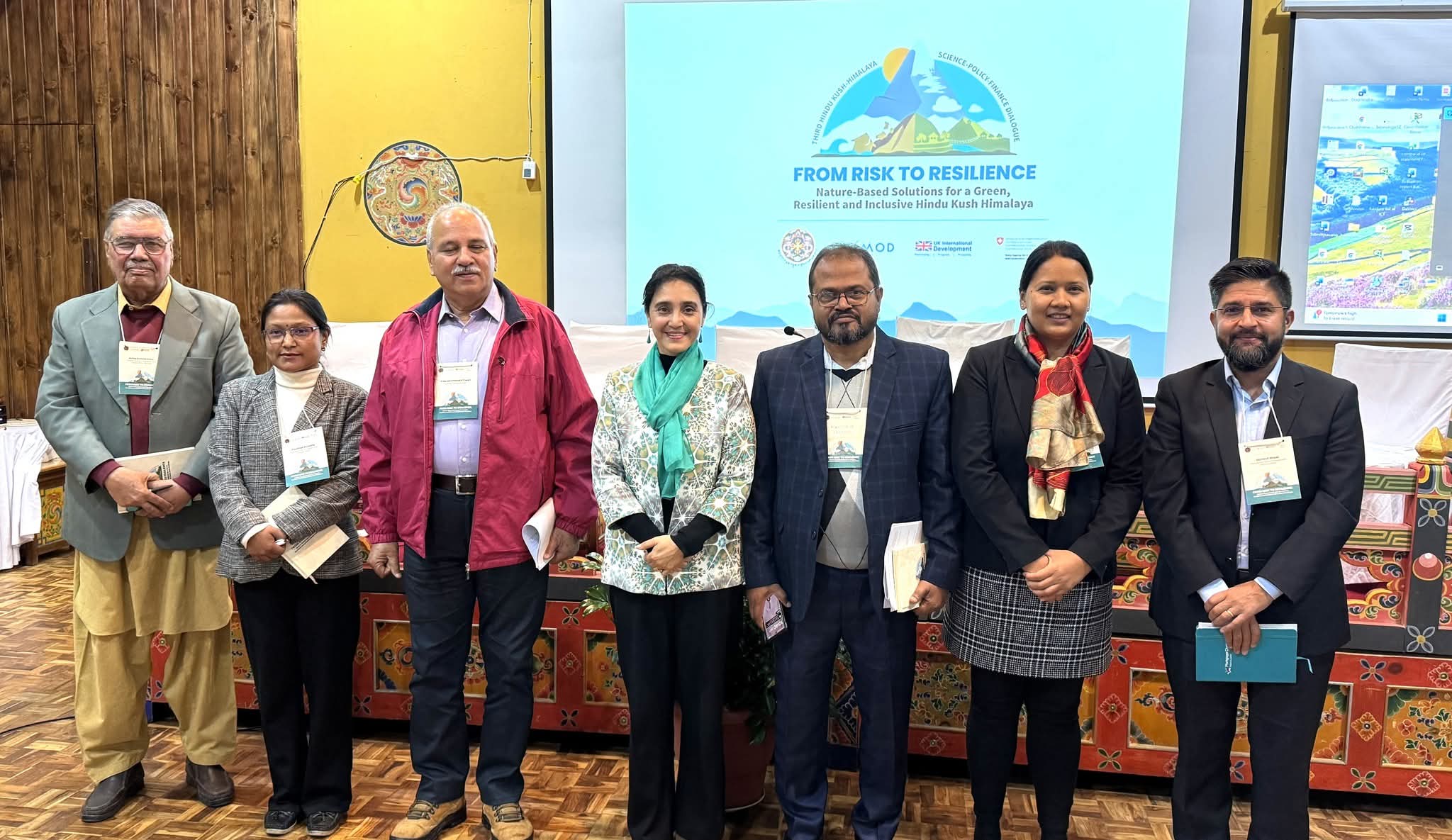
For mountain communities and local governments across the HKH, the path forward lies not only in restoring nature, but in building the evidence, tools, and confidence needed to act decisively in an era of growing climate uncertainty.