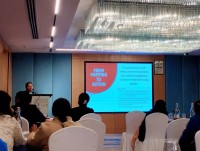
Lalitpur, November 19, 2026 - The Nepal Development Research Institute (NDRI) organized a national workshop titled “Bhotekoshi-Trishuli Disaster 2026: From Cascading Risks to Resilience” on November 18, 2026, at Square Hotel, Jhamsikhel, Lalitpur, bringing together experts, policymakers, researchers and stakeholders to discuss the lessons of cascading disasters and identify practical approaches to strengthening disaster resilience in Nepal.
The workshop focused on understanding the interconnected risks associated with cascading multi-hazard events in mountain environments and exploring strategies to improve disaster preparedness, protect vulnerable communities and promote climate-resilient development.
The programme began with a session chaired by Dr. Manjeshwori Singh, Acting President of NDRI. Dr. Shikha Thapa Magar, Executive Director of NDRI, delivered the welcome remarks and outlined the objectives and key highlights of the workshop.
The keynote address was delivered by Dr. Rabindra P. Osti, Principal Water Resources Specialist at the Asian Development Bank (ADB), Manila. His presentation highlighted cascading disaster risks, approaches to strengthening resilience and regional lessons that could inform Nepal's disaster risk management and recovery efforts.
The programme also featured opening remarks by Mr. Yubraj Bhusal, former Secretary of the Government of Nepal and former Chief Executive Officer of the National Reconstruction Authority. The inaugural remarks were delivered by the Chief Guest, Hon'ble Dr. Gunakar Bhatta, Vice-Chairperson of the National Planning Commission, Government of Nepal.
During the technical session, chaired by Mr. Sanjeeb Baral, Executive Director of the Centre of Hydrology and Water Resources Research, Government of Nepal, two presentations examined the scientific dimensions of cascading hazards and the need for long-term resilience planning.
Dr. Divas B. Basnyat, Lead of the Water and Climate Programme at NDRI, presented on “Climate Change Pre-conditioning and Attribution of Cascading Multi-Hazard Events in Mountain Environments.” His presentation addressed the relationship between climate change and the conditions that can contribute to complex, interconnected disaster events in fragile mountain environments.
Similarly, Prof. Dr. Punya Prasad Regmi, Senior Research Specialist at NDRI, presented on “From Cascading Hazards to Future Resilience: Transforming Settlements, Agriculture and Infrastructure.” The presentation focused on the importance of transforming development approaches to reduce disaster risks and strengthen the resilience of settlements, agricultural systems and critical infrastructure.
An important component of the workshop was the interactive group discussion, which brought participants together to examine challenges and potential solutions under three thematic areas: Debris Flow Dynamics, Climate Change and Its Impacts, and Resilient Development.
These discussions provided opportunities for participants to exchange technical knowledge, reflect on the consequences of cascading hazards and identify practical priorities for improving disaster preparedness and reducing future vulnerabilities.
The workshop concluded with a presentation of key takeaways by Prof. Dr. Tara Nidhi Bhattarai, Lead of the Disaster Management Programme at NDRI. Dr. Nawa Raj Khatiwada, Senior Research Specialist at NDRI, subsequently presented the way forward, highlighting the importance of translating the discussions and findings into practical actions.
Strengthening Nepal's resilience to future disasters
The 2026 Bhotekoshi–Trishuli disaster has underscored the vulnerability of Nepal's mountain communities, infrastructure and livelihoods to interconnected natural hazards. Such events demonstrate that disaster risks cannot be addressed through isolated interventions alone, but require coordinated approaches that consider climate change, geological and hydrological processes, land-use planning, infrastructure development and community preparedness.
The national workshop provided an important platform for connecting scientific research, policy perspectives and practical experiences to strengthen Nepal's understanding of cascading disaster risks.
Its discussions also reinforced the need for evidence-based planning, stronger institutional coordination, resilient infrastructure, climate-informed development and greater community participation in disaster risk reduction.
As Nepal continues to address the impacts of climate-related and other natural hazards, translating research and policy recommendations into effective action will be essential to protecting lives, livelihoods and development gains.
Building resilience must therefore go beyond responding to disasters after they occur. It requires anticipating risks, preparing communities, strengthening institutions and ensuring that future development is designed to withstand an increasingly uncertain environment.
#NDRI #BhotekoshiTrishuliDisaster2026 #DisasterRiskReduction #CascadingDisasters #ClimateChange #MountainResilience #ClimateResilience #DisasterPreparedness #ResilientDevelopment #SustainableDevelopment #Nepal #ClimateAdaptation #CommunityResilience #RiskInformedDevelopment #EcosphereNews