Kathmandu, Aug. 14 (Ecosphere News) - The Trekking Agencies’ Association of Nepal (TAAN) has called on the government to give the trekking industry separate legal recognition in the proposed Tourism Act 2081, arguing that trekking tourism requires distinct policy provisions to strengthen Nepal’s mountain economy, employment, and destination management.
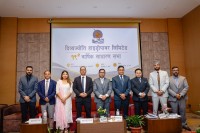
The appeal was made during a policy interaction program on trekking tourism organized by TAAN on August 13, 2026, at Aloft Hotel, Kathmandu. The event brought together senior mountain tourism leaders, former TAAN office-bearers, tourism entrepreneurs, and representatives of key tourism-related organizations to review and provide feedback on a draft policy document prepared by TAAN.
According to TAAN, the recommendations gathered from the interaction will be finalized and submitted to the relevant government ministries and the parliamentary committee currently reviewing the tourism bill.
The program was convened by TAAN General Secretary Sonam Gyalgen Sherpa and chaired by TAAN President Sagar Pandey. In his remarks, President Pandey emphasized that trekking tourism is one of Nepal’s most important tourism products and contributes significantly to rural livelihoods, foreign exchange earnings, and the promotion of Himalayan culture and biodiversity.
TAAN has urged lawmakers to ensure that the trekking sector is properly incorporated as a separate chapter in the draft Tourism Act 2081, stating that the existing legal framework does not adequately address the specific needs of trekking operations, guide management, safety standards, environmental protection, and community-based tourism development.
The interaction was attended by prominent figures from Nepal’s mountain tourism sector, including Ang Tshering Sherpa, Suman Pandey, Deepak Mahat, Jyoti Adhikari, Ramesh Dhamala, Chandra Prasad Rizal, Navraj Dahal, Lakphuti Sherpa, Chewan Devkota, Khum Bahadur Subedi, Sant Kumar Subba, Bikram Neupane, Mohan Lamsal, Sarita Lama, Binod Sapkota, and Kapil Pandey, among others.
Representatives from major tourism and indigenous organizations also participated, including Nepal Federation of Indigenous Nationalities (NEFIN) President Nima Lama Hyolmo, Nepal Mountaineering Association (NMA) President Fur Galje Sherpa and General Secretary Rajendra Bahadur Lama, Expedition Operators Association, Nepal (EoA) General Secretary Rishi Raj Bhandari, and Himalayan Rescue Association (HRA) General Secretary Prayush Neupane.
During the session, TAAN Senior Vice President Karma Sherpa outlined the objectives of the interaction and stressed the need for a long-term policy framework that recognizes trekking as a specialized tourism industry linked with mountain conservation and local economic development.
TAAN Chief Executive Officer Ram Chandra Sedai presented the draft provisions prepared for the trekking sector, covering issues related to trekking management, professional standards, safety and rescue coordination, environmental responsibility, and institutional reforms.
TAAN office-bearers and executive committee members Lakpa Temba Sherpa, Ambir Gurung, Pabitra Tamang, Nakul Devkota, Rajendra Amgain, and Ramesh Lamsal were also present at the program.
Tourism stakeholders participating in the interaction underscored that trekking tourism remains a backbone of Nepal’s mountain tourism industry, supporting thousands of guides, porters, lodge operators, transport workers, and local communities across the Himalayan region. They noted that a clear legal framework could help improve service quality, visitor safety, sustainable trail management, and Nepal’s competitiveness in the global adventure tourism market.
The interaction concluded with a shared commitment to work collectively with the government and parliament to ensure that the new tourism legislation reflects the realities and priorities of Nepal’s trekking and mountain tourism sector.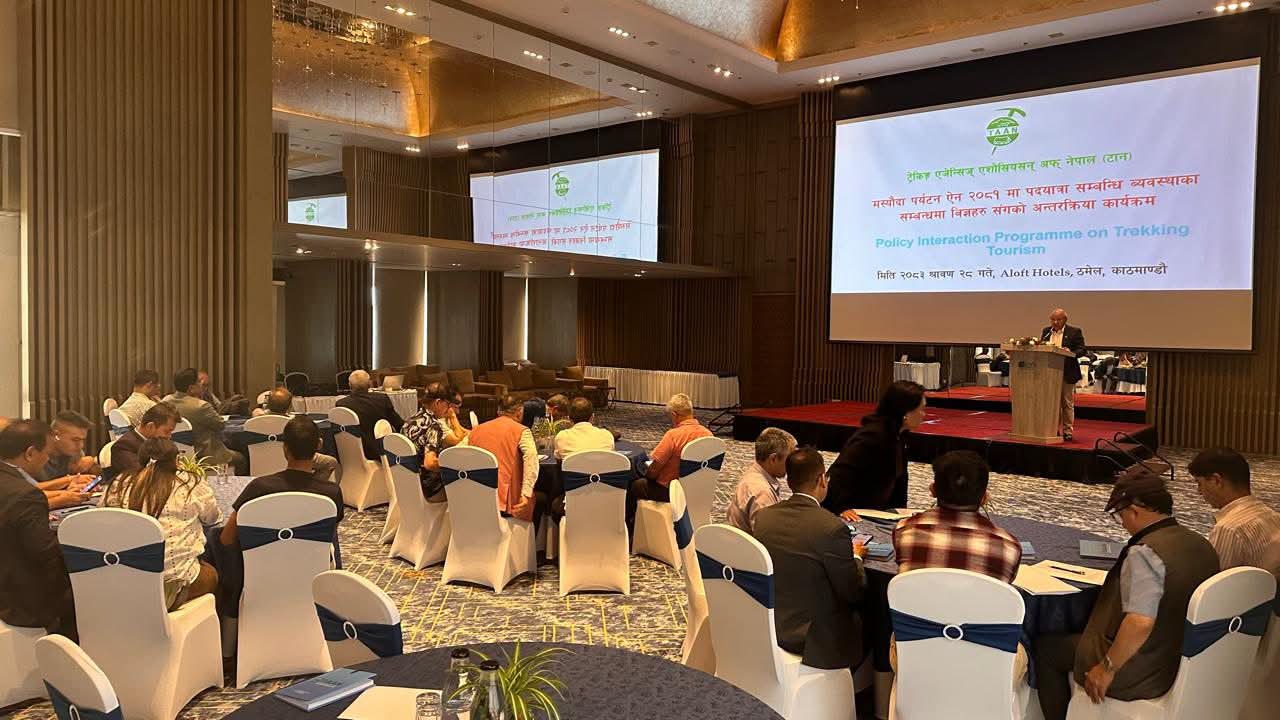
#EcosphereNews #TAAN #TrekkingTourism #TourismAct2081 #NepalTourism #MountainTourism #HimalayanTourism #SustainableTourism #AdventureTourism #Kathmandu #VisitNepal #TrekkingInNepal #TourismPolicy #Himalaya #NepalMountains