Kathmandu, Aug. 9: President Ram Chandra Paudel has stated that the distinct identity, language, culture, and traditional heritage of Nepal’s indigenous nationalities are a source of national pride and an integral part of the country’s multicultural identity.
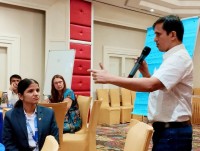
Addressing a programme organized by the Indigenous Nationalities Commission on the occasion of the 32nd World Indigenous Peoples’ Day, President Paudel said Nepal is a multiethnic, multilingual, multireligious, and multicultural nation, and that the Constitution has embraced the principle of unity in diversity while guaranteeing the rights and interests of all communities.
He described indigenous nationalities as the “sons and daughters of the soil” whose relationship with water, land, forests, and natural resources is inseparable and deeply spiritual. The President emphasized that protecting indigenous identity and ensuring meaningful participation in state policy-making and decision-making processes is a constitutional responsibility of the government.
Citing recent statistics, President Paudel noted that the representation of indigenous nationalities in local governments has reached 36.8 percent, calling it an encouraging sign for inclusive democracy. He stressed that expanding access to education remains essential for empowering indigenous communities and ensuring their long-term participation in national development.
Highlighting Nepal’s international commitments, the President said Nepal was the first country in South Asia to ratify ILO Convention No. 169, the international treaty that recognizes and protects the rights of indigenous and tribal peoples. He reaffirmed Nepal’s commitment to the United Nations Declaration on the Rights of Indigenous Peoples (UNDRIP) and the Convention on Biological Diversity, both of which recognize indigenous peoples’ rights, cultural autonomy, and traditional knowledge systems.
President Paudel also underscored the role of the Indigenous Nationalities Commission, established under the Constitution following the creation of the Federal Democratic Republic of Nepal, in safeguarding indigenous history, languages, cultures, and promoting community empowerment.
Referring to the Tarai-Madhes region, he said that a prosperous Nepal cannot be achieved without the development of the southern plains and without ensuring justice, dignity, and rights for the indigenous communities living there. He added that past conflicts and grievances should be addressed through democratic dialogue and constitutional processes, and that social harmony, mutual respect, and national unity are essential for strengthening Nepal’s sovereignty and democratic future.
The President further emphasized the need to commercially transform traditional indigenous knowledge, skills, and technologies to support economic empowerment. He suggested that concepts such as open-air living museums could help connect indigenous culture with sustainable tourism, creating economic opportunities while preserving cultural heritage for future generations.
The President’s remarks have been viewed as a significant reaffirmation of Nepal’s commitment to inclusive governance, indigenous rights, cultural preservation, and sustainable development, particularly at a time when indigenous knowledge is increasingly recognized as vital for biodiversity conservation, climate resilience, and community-based tourism.
#EcosphereNews #WorldIndigenousPeoplesDay #IndigenousRights #RamChandraPaudel #Nepal #CulturalHeritage #IndigenousNationalities #UnityInDiversity #InclusiveGovernance #SustainableTourism #TraditionalKnowledge #Biodiversity #ClimateResilience #FederalNepal #SocialHarmony #CulturalPreservation #NepalNews #EcosphereWorld