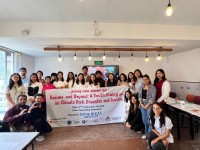
Pokhara, Nepal - Pokhara Metropolitan City and the Asian Development Bank (ADB) have held discussions on advancing climate-resilient and green investment initiatives aimed at mitigating climate change impacts while promoting sustainable and inclusive economic growth in the city.
The meeting focused on the Green and Resilient Financing Investment Program (GREFF), a proposed initiative designed to channel green finance into priority sectors that strengthen climate resilience and support local economic development.
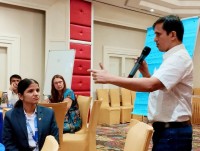
During the discussion, Pokhara Metropolitan City Mayor Dhanraj Acharya outlined the city’s agricultural strategy and tourism development priorities, expressing the metropolis’s readiness to collaborate under the program. He highlighted Pokhara’s strong potential in agriculture and tourism, noting that partnerships with development agencies could help transform these sectors into more result-oriented and sustainable engines of growth.
ADB’s Country Operations Head, Arnaud Heckman, reaffirmed the Bank’s commitment to supporting Pokhara’s economic growth by working closely with the private sector, cooperatives, and small and medium enterprises (SMEs). He emphasized that the program aims to reduce climate-related risks while fostering green employment opportunities at the local level.
Similarly, Manahar Kadariya, Chief of the Economic Development Division of Pokhara Metropolitan City, stated that the metropolitan area has significant cultivable land and opportunities across production, consumption, and market access. He stressed the importance of strengthening agricultural value chains to maximize local economic benefits.
The GREFF program will be implemented with financial support from the Government of Japan and is aligned with Nepal’s broader efforts to address climate change while enhancing inclusive economic growth. The initiative prioritizes agribusiness and eco-tourism, with planned investments in local infrastructure, innovation, and climate-resilient enterprises.
According to the discussion, the project envisions mobilizing resources through a blended financing approach, combining grants, concessional loans, and private capital to unlock local economic potential. The program will be implemented in coordination with Nepal’s National Adaptation Plan and Local Adaptation Plans of Action, ensuring alignment with both national and local climate strategies.
Stakeholders expressed confidence that such collaboration would play a crucial role in positioning Pokhara as an environmentally responsible, climate-resilient, and economically robust city, contributing to long-term sustainable urban development.