Myagdi, Nepal - The long-awaited upgrading of the Tatopani-Ghasa section of the Beni-Jomsom-Korala Road - part of the nationally significant Kali Gandaki Corridor connecting China and India - has been successfully completed. This milestone marks a major improvement in regional connectivity, significantly reducing travel time and enhancing economic and tourism potential in the western region of Nepal.
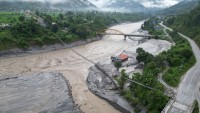
The improvement work focused on widening the road to an 11-meter carriageway and constructing two-lane blacktopped and concrete-paved segments on the crucial 16.5-kilometer stretch from Nagdhunga in Annapurna Rural Municipality-2 (Myagdi) to Kaihkhukhola in Thasang Rural Municipality-4 (Mustang). This section falls under the broader Beni-Jomsom-Korala Highway Project, a 202-kilometer priority route designated as the lifeline of Gandaki Province.
Project Implementation and Completion
The road upgrading project commenced in fiscal year 2073/74 (2016/17 A.D.) with an estimated contract cost of Rs 63 crore, awarded to the Sharma–Gajurmukhi Joint Venture (JV), including variation orders. Except for a 3.3-kilometer segment affected by landslides, the contractor has completed blacktopping and concrete paving:
2.5 km concrete paved
10.7 km blacktopped using DBSD technology
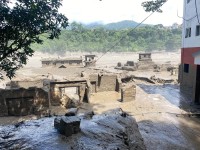
The work was delayed by a combination of challenging terrain, COVID-19 related interruptions, frequent floods and landslides, and shortages of construction materials sourced from riverbeds - a common challenge for infrastructure development in Himalayan regions.
Despite these setbacks, the project has now reached the finishing stages, with formal handover procedures to the Road Project Office underway.
Engineering Challenges and Strategic Solutions
The route passes through rugged and geologically sensitive zones. In particularly difficult areas such as Kabrebhir, Badarjung, and Ghoptebhir, engineers employed rock anchoring techniques to stabilize slopes and safely widen the roadway. Key settlements such as Nagdhunga, Jalthale, Guinthe, Sukebagar, Dana, Titar, Kabre, and Ghasa have now benefited from upgraded pavement conditions.
Local Impact: Reduced Travel Time and Increased Mobility
Local leaders and community members have welcomed the completion of the upgraded road, highlighting its immediate socio-economic benefits:
Travel time between Tatopani and Ghasa has reduced dramatically - from approximately two hours to just thirty minutes.
The improved transport corridor has eased movement for tourists, pilgrims, residents, and freight vehicles, including commercial cargo bound for and from the Korala border point with China.
Tourism activity in the region is showing early signs of recovery and growth, attributed largely to improved accessibility.
“Now, the journey that used to take two hours has become just half an hour,” said Ramesh Purja, Ward Chair of Annapurna Rural Municipality-3, emphasizing how the upgraded road is transforming daily life for local communities.
Status of the Beni-Jomsom-Korala Highway
The larger Beni-Jomsom-Korala Road, spanning 202 kilometers of the 435-kilometer Kali Gandaki Corridor, represents one of Nepal’s most ambitious regional connectivity projects. So far:
94 km of road has been completed as gravel
88 km has been blacktopped
14 bridge structures have been built
Out of the total estimated cost of Rs 10.57 billion, approximately 82 percent (Rs 8.20 billion) has already been expended, according to Project Chief Tejaswi Sharma.
Future Outlook
With the Tatopani-Ghasa segment now upgraded, attention turns to other remaining sections of the highway. The recently completed 16-kilometer Kaihkhukhola-Khanti section was handed over two years ago, and efforts continue to accelerate progress on subsequent segments.
The improved corridor is expected to boost trade, tourism, economic opportunity, and cross-border engagement between Nepal, India, and China - aligning with national infrastructure priorities and regional development goals.