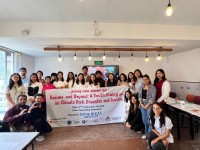
Kathmandu - International Mountain Day 2025 was observed in Nepal under the leadership of the Government of Nepal’s Ministry of Forests and Environment, bringing together policymakers, development partners, environmental experts, youth leaders, and community representatives to address the growing challenges facing mountain ecosystems and communities.
The national-level event served as a platform to reflect on outcomes from COP30, advance Nepal’s Mountain Agenda, and share the draft Nepal Mountain Resilience Strategy, a policy framework aimed at strengthening climate adaptation, water security, and sustainable livelihoods in mountain regions.
Speakers emphasized that Nepal’s mountains function as critical “water towers”, sustaining rivers, agriculture, energy systems, biodiversity, and cultural heritage from the Himalayas to the plains. However, these lifelines are increasingly under threat due to climate change, unsustainable land use, and growing disaster risks.
A key concern raised during the event was the rapid decline of mountain springs. Around 80 percent of the 13 million people living in Nepal’s hills and mountains depend directly on springs for drinking water, irrigation, and daily livelihoods. Research conducted by the Youth Alliance for Environment (YAE), which has inventoried and mapped thousands of springs across major watersheds of Nepal, indicates that nearly 70 percent of spring sources are drying or experiencing significant reductions in flow over the past decade.
Experts warned that accelerating glacier melt, changing precipitation patterns, and prolonged dry periods are intensifying water stress in mountain communities, increasing vulnerability to landslides, floods, and food insecurity. Despite contributing least to global emissions, mountain populations remain on the frontlines of climate impacts, highlighting the urgency of climate justice in national and international policy discussions.
The event underscored the need for integrated mountain-specific policies, investment in spring-shed management, community-based adaptation, and meaningful youth participation in climate governance. The draft Mountain Resilience Strategy was presented as a step toward aligning national development planning with the realities of mountain ecosystems.
Youth Alliance for Environment (YAE) expressed its commitment to supporting evidence-based advocacy and community action, noting that protecting mountains is inseparable from ensuring water security, resilient livelihoods, and sustainable development for both upstream and downstream populations.
As Nepal continues to champion mountain issues on global platforms, participants stressed that safeguarding mountains today is essential not only for Nepal, but for the broader regional and global climate system.