Kathmandu, December 19, 2025
Voices from Nepal’s remote Himalayan district of Mustang reached a wider national and international audience at the conclusion of the 13th Nepal Human Rights Film Festival (NHRFF), as two climate-focused films made by local women were screened during the festival’s final day.
The films were produced under the Climate Futures South Asia initiative, supported by a UK-based cultural relations organization, in collaboration with the Human Rights Film Centre. The project aimed to empower women in Mustang to document climate change impacts and community resilience through participatory filmmaking.
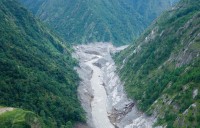
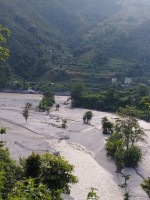
Earlier this year, grants were provided to facilitate filmmaking workshops in Mustang, where 14 women from the district were trained in storytelling, community engagement, and basic film production. Through these workshops, participants worked closely with their communities to capture lived experiences of climate change in Upper Mustang — a region increasingly affected by shifting weather patterns, water scarcity, and environmental vulnerability.
The initiative resulted in three short films, two of which were selected for screening at NHRFF. The screenings offered festival audiences insight into climate challenges from the perspective of women living in one of Nepal’s most climate-sensitive landscapes.
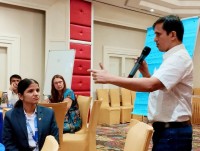
Two filmmakers, Tsering Chhomo and Karsang Dholkar Gurung, travelled from Mustang to Kathmandu to present their work in person. In addition to attending the film screenings, they participated in a panel discussion alongside Dr Michael Brown, Professor at the University of South Wales, and Nhooja Tuladhar, Head of Arts at the British Council.
The panel explored themes of community-led storytelling, the process of learning filmmaking skills, and the role of visual media in communicating climate realities and resilience from marginalized regions. The filmmakers shared their experiences of working within their communities and translating local knowledge and concerns into film narratives.
As part of the broader project outcomes, a handbook on participatory filmmaking is currently being developed. The publication is intended to support other communities in using filmmaking as a tool for dialogue, inclusion, and positive social change, particularly in contexts affected by climate and environmental challenges.
The Mustang filmmaking initiative highlights the growing role of community-driven media in climate discourse, demonstrating how locally grounded storytelling can contribute to broader conversations on environmental justice, resilience, and human rights.